
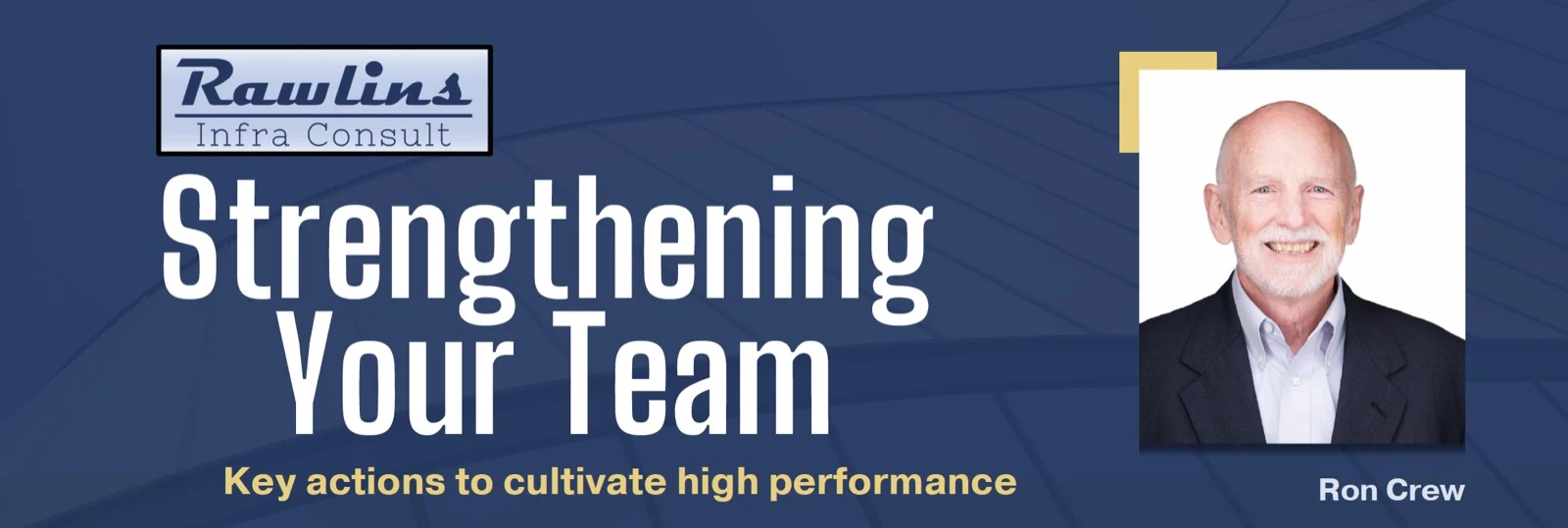
Is a strong team important to your organization? Is a strong team possible in your organization? Can you strengthen your team as a manager, team leader, or supervisor? You likely answered yes to all three questions—now, let’s explore key actions to pave the way for a high-performing team through the Rawlins lens.
We’ve all heard this saying before—lead by example. Still, the concept is valid as all eyes are on the team leader. Effective leaders set the tone for behavior, performance, and culture. Team members watch how you handle decisions, how you react to setbacks, and how you treat others. Leading by example requires sincerity, fairness, decisiveness, consistency, clarity, and a determination to uphold the values you expect from your team.
Strong teams emerge in a culture of mutual trust. Effective leaders build trust over time through consistent actions (explored below), creating a virtuous cycle. Trust between team members stems from clear expectations and shared goals communicated by leaders. When people feel trusted and respected, they bring out the best in each other. From there, cohesion and motivation—also essential to building high-performing teams—develop and reinforce each other, setting the stage for additional capabilities.
Leaders provide the context for clear communication by articulating a clear vision for the team. Clear communication enables teams to align with a shared purpose and solve problems efficiently—freeing up time and mental space to innovate and improve outcomes. Across transportation and infrastructure projects, clear communication underpins safety, reliability, and productivity. Whether you lead a division within an organization, manage project teams, or supervise field crews, you’ve likely felt the challenges of communication gaps, which can lead to uneven performance and diminished morale, especially as teams function under constant pressure to deliver more with less.
Leaders who communicate expectations, priorities, and goals clearly empower team members to take ownership confidently. Empowering team members to act and lead demonstrates trust in them and, in turn, strengthens trust in leaders. Delegation builds ownership and commitment, resulting in increased confidence and improved performance. Make sure team members understand how their work contributes to achieving shared goals.
The ultimate measure of leadership is the ability to inspire others to succeed collectively. Through consistent trust-building and empowerment, leaders create environments where individuals and organizations thrive together. Knowing each team member as an individual and recognizing the value they bring has a highly positive impact on your team.
Empathy and emotional intelligence are essential for developing strong leadership. Proactively gaining a deeper understanding of each team member’s strengths, drivers, personal goals, and challenges will yield significant dividends as people will feel valued and motivated to consistently bring their best to the team. Encourage open dialogue and develop a culture of psychological safety while promoting active listening. An atmosphere of transparency fosters accountability. Effective leaders inspire through autonomy and creativity rather than control.
Establishing an achievable path to success requires setting realistic goals, timelines, and deadlines while maintaining team members’ motivation, focus, and well-being. When the team achieves a great outcome, they thrive, cohesion increases, and growth results both professionally and personally. Seek opinions and input from team members to make informed decisions. Your team will go out on a limb for you if individuals trust that their opinions matter. Team members must also know that you will back them, especially as they step outside of their comfort zones.
High-performing teams value learning and change. Embrace errors as learning opportunities. Foster flexibility, curiosity, and feedback. These actions enhance resilience, encourage forward thinking, and help teams adapt to new challenges. Shared purpose and alignment support motivation and cohesiveness, while diverse skill sets bring a variety of perspectives and approaches to attain strategic goals. Continue to build strength in your team by regularly celebrating achievements, reflecting on lessons learned, and renewing collective team commitment to growth and excellence.
One Final Thought
Across departments of transportation, other government agencies, and the broader transportation industry, strong teams consistently achieve key goals that support operational excellence: improve efficiency, reduce costs, and minimize delays; communicate more clearly across roles and disciplines; strengthen engagement; and adapt more effectively to emergencies, shifting priorities, and the unexpected.
With thanks to April Blackburn and David Douglas for their contributions to this article.
Ready to build a stronger team?
Over the course of his career, Ron Crew has built and led strong teams that have successfully delivered complex right-of-way projects. He fosters collaboration among diverse professionals and aligns them around clear project goals.
Connect With Us Today